

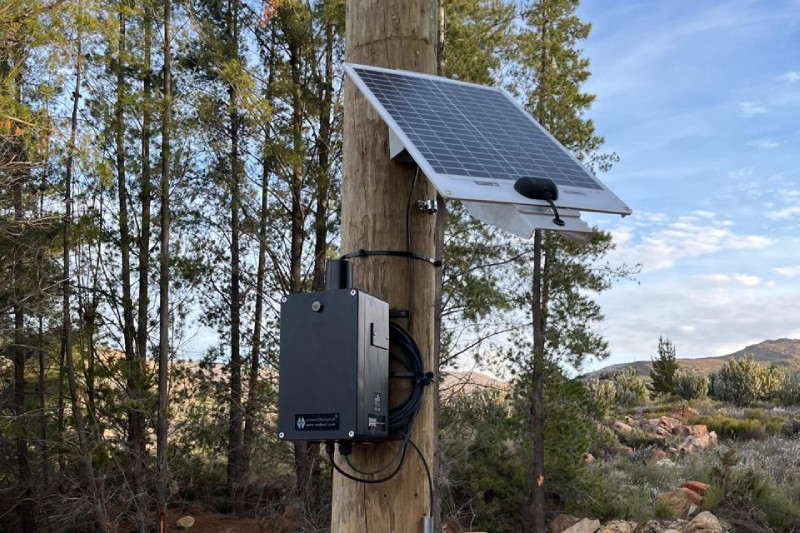
The original installation goes back to 2024. Our South African team installed a Starflow sensor to monitor flow down a stream channel. For a site where it doesn’t rain often and the stream trickles over the sensor every so often… our solution seemed perfect. And it was, until a one in 100 year rain event followed by serious flooding hit the region.
The irony is that our installation was solid and it survived but we did not bargain on trees and boulders coming down the “little stream”. Unfortunately the sensor took a few serious hits and was damaged beyond repair. Luckily, the DataHub stood tall and survived the flood.
While the customer dealt with the insurance claim to replace the StarFlow Sensor, we went back to the drawing board. Considering that the one in 100 year rain events are only supposed to happen once every 100 years, a serious flood such as this event was highly unlikely. However, we still wanted to make sure that the sensor was protected without obstructing the natural flow of the water over the sensor.
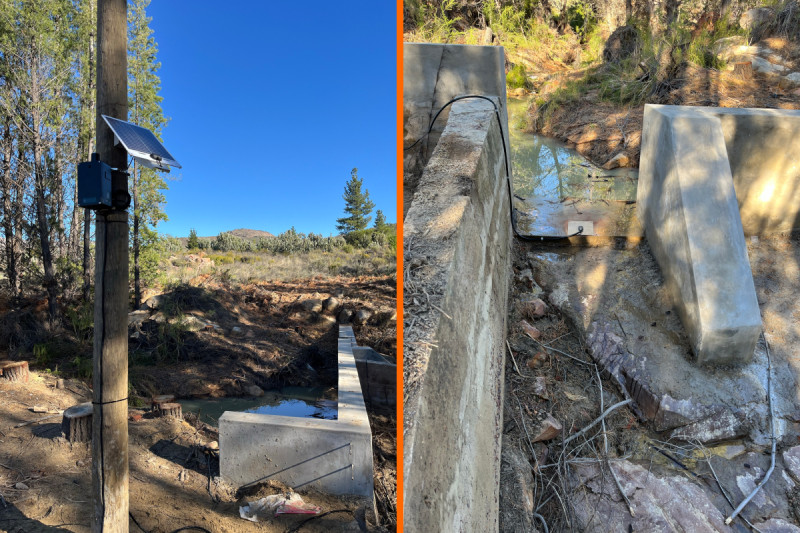
The solution… reinforce the existing wall on the side of the channel and add a rebar wedge about 2m upstream of the channel, to prevent large objects from flowing through the channel where the sensor was positioned.
During the installation of the new Starflow sensor, the cabling was threaded through stainless conduit and secured against the channel walls to protect the cable.
Fast forward 11 months and 2 great datasets where the trickle we expected was recorded… A rain and flood event that destroyed half of the Western Cape’s vineyards and wine stock, hit and our system was offline again.
It took 3 weeks for the stream to regain its status from large river to stream and another three weeks of pot hole fixing and road works before anyone could get to site and assess the status of the system.
The DataHub still stood tall and the sensor remained in place, but sensor and the cable took a beating and was beyond repair.
Back to the drawing board… AGAIN!
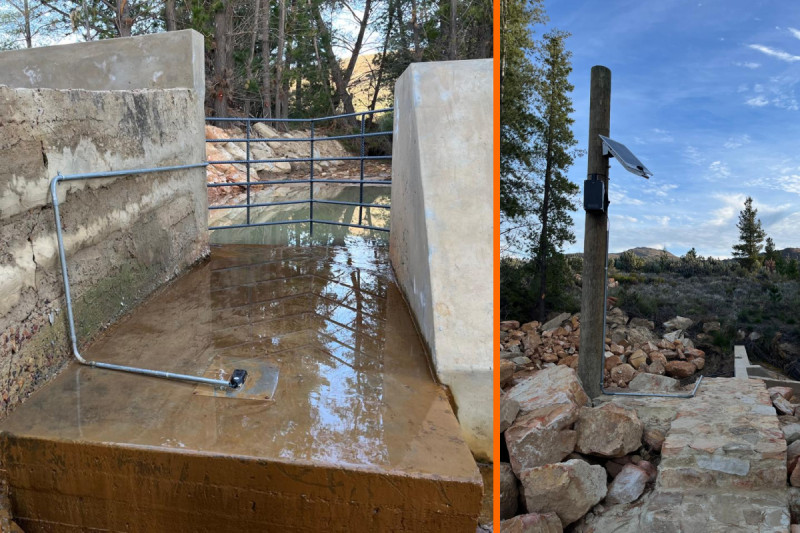
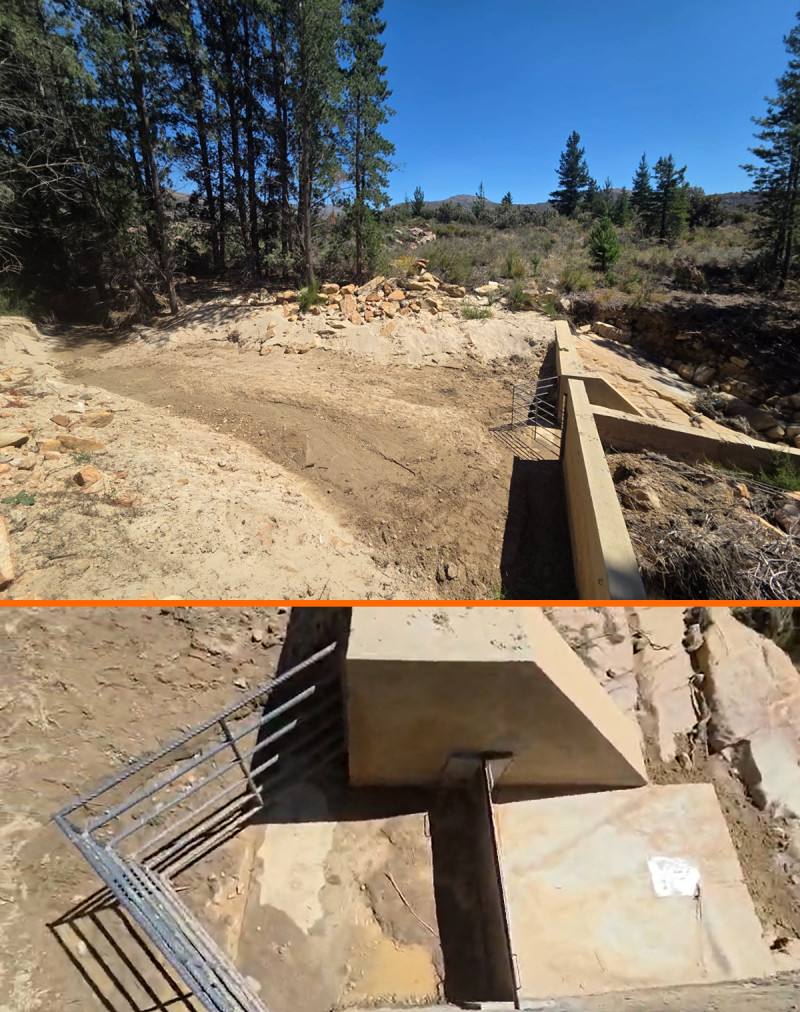
At this point we knew that the best solution in theory was not the best practical solution. We had to go back to basics to make sure that whatever sensor we install was protected from direct impact of the water and anything that it may carry. Together with the customer we “redesigned” the channel and added a steel plate and stilling well for a weir like set up. A Keller 46X surface water level sensor was installed in a steel stilling well. The cable was threaded through a hole drilled through the wall and was fixed behind the wall in a steel casing to protect it from free flowing objects.
The weir-like structure comes with slightly more conversations and calculations but luckily we have a pretty cool web platform and some pretty savvy people in our team.
With this site’s luck, the trickling stream will probably not turn into one of the great rivers of the world again any time soon, but when it does, we are ready for it!! At least we have a happy customer with data pinging through every hour.
From site survey to installation, we partner with you at every stage. With over 40 years of experience, our team can guide you to find the best solution for your application. Contact us to discuss your project.